

Is Antique Gold Jewellery Worth More Than Scrap?
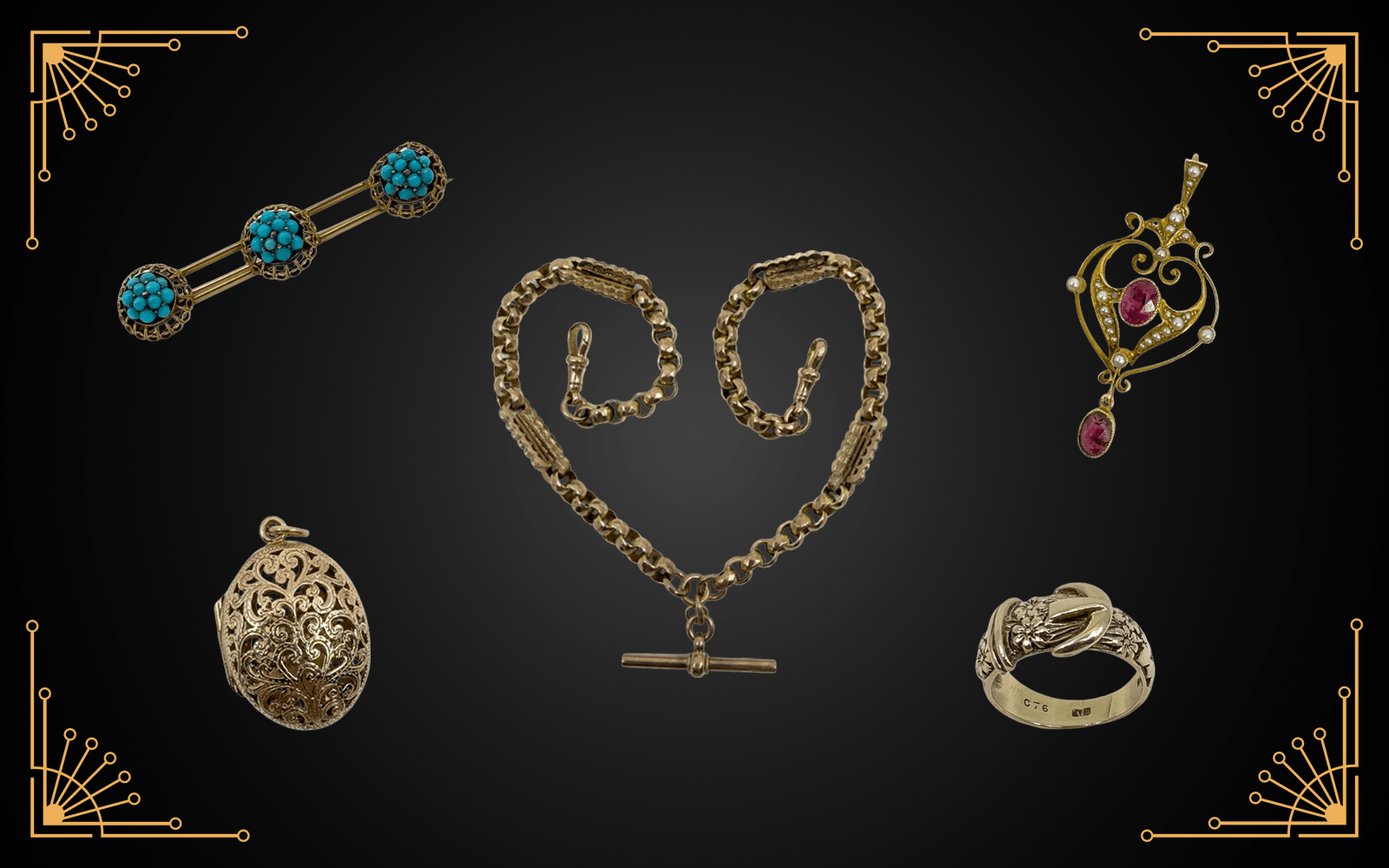
If you have an old gold ring, chain, brooch or bracelet, it is easy to look at the weight, check the gold price and assume that is the value. Sometimes it is close. Sometimes the gold is only the starting point.
Antique gold jewellery can be worth more than scrap because it may have value as a complete object. Design, workmanship, gemstones, maker, rarity, condition, originality and demand can all matter. Equally, age alone does not guarantee a premium.
The useful question is not simply, “How old is it?” but, “Would somebody want this as jewellery rather than just for its gold?”
Table of Contents
- Quick Answer: Is Antique Gold Jewellery Worth More Than Scrap?
- What Counts as Antique Gold Jewellery?
- Gold Value Is Only the Starting Point
- What Can Make Antique Gold Worth More Than Scrap?
- Does Age Alone Make It Valuable?
- Hallmarks and Historic Gold Standards
- Gemstones Can Change the Picture
- Condition, Originality and Provenance
- What to Check Before Selling Antique Gold for Scrap
- Why Different Selling Routes Give Different Values
- Quick Comparison Guide
- FAQs
- You Might Also Like
- Final Thoughts
- About Ps Its Vintage
- References
Quick Answer: Is Antique Gold Jewellery Worth More Than Scrap?
It can be, but not automatically.
Scrap value is mainly concerned with the recoverable gold in an item. A complete antique jewel can also be desirable for its period design, craftsmanship, gemstones, maker, rarity, condition or originality.
Two pieces with the same gold weight and fineness can therefore have very different markets. One may be valued mainly for metal; another may be bought to wear, collect or preserve.
There is no reliable percentage that can simply be added because something is antique. The extra value, if there is any, belongs to the individual piece.
What Counts as Antique Gold Jewellery?
For this guide, I use antique to mean more than 100 years old. That is consistent with HMRC’s definition of antiques for the UK VAT margin-scheme rules. The word can be used more loosely in everyday conversation, so 100 years should not be treated as one universal legal definition for every possible context.
A ring from the 1970s may be vintage, but it is not antique under the 100-year convention used here. More importantly, passing the 100-year mark does not suddenly make a piece valuable. Age provides context; the jewellery still has to stand on its own merits.
Gold Value Is Only the Starting Point
Gold gives antique jewellery an underlying material value, so weight and fineness matter. But a gold calculation tells you about the metal content, not necessarily what the complete piece could sell for.
If you want the detailed explanation of spot price, melt value, scrap offers and gold-purity calculations, read Gold Jewellery Value vs Scrap Value: Why the Figures Differ.
For an antique piece, the gold value is best treated as a useful baseline rather than an automatic selling price.


What Can Make Antique Gold Worth More Than Scrap?
The factors that matter most are usually the ones that make somebody want the piece as jewellery rather than as metal.
- Design and craftsmanship: hand engraving, pierced work, fine chain making, enamel and sophisticated stone setting can all add interest.
- Maker or designer: a recognised maker, workshop or retailer may create additional demand.
- Gemstones: diamonds, coloured stones, pearls and enamel can contribute separately to value.
- Rarity: an unusual form, construction, maker or surviving example can be more desirable than a common piece.
- Condition and originality: original fittings, stones and proportions may matter, especially to collectors.
- Wearability and demand: historically interesting jewellery is not always commercially easy to sell; pieces people actually want to wear often have a broader market.
This is why the scales can only tell part of the story. They measure grams; they do not measure desirability.


Does Age Alone Make It Valuable?
No. A plain 120-year-old band can still be commercially modest, while a smaller ring with appealing period design, original old-cut stones or an interesting maker may attract much more attention.
That is particularly important with inherited jewellery. “It is old” is a good reason to look more closely, but not a reason to attach an arbitrary premium.
Hallmarks and Historic Gold Standards
Hallmarks can be extremely useful when researching antique gold. A complete modern UK hallmark contains a sponsor’s mark, a metal and fineness mark, and an assay office mark. A date letter is optional under the current system.
On older British jewellery, historic combinations of marks can help establish fineness, assay office and when the piece was hallmarked. The sponsor’s mark identifies the person or business that submitted the article for hallmarking; it does not necessarily identify the craftsperson who physically made it.
Historic standards can also add context. Britain once recognised 12ct and 15ct gold. In 1932 those standards were cancelled and a 14ct standard was substituted. Fifteen-carat gold is 625 parts gold per thousand and 12ct is 500 parts per thousand.
Those marks can make a piece interesting to research, but neither a hallmark nor an obsolete fineness automatically guarantees collector value.
For more detail, see my guides to reading hallmarks, why some gold jewellery has no hallmark and 12ct and 15ct gold.


Gemstones Can Change the Picture
A scrap calculation is mainly about recoverable precious metal. A complete antique jewel may also contain diamonds, coloured gemstones, pearls or enamel that contribute to its desirability and value.
For diamonds, carat weight is only one factor; colour, clarity and cut matter too. Coloured stones raise separate questions about identity, treatment, condition, size and quality.
Just as importantly, the setting can be part of the historical integrity of the piece. Removing stones simply to get a cleaner gold weight can damage an original antique jewel or destroy value that existed only while the piece remained intact.
Condition, Originality and Provenance
Antique jewellery has often been resized, repaired, shortened, converted or fitted with replacement parts during its life. None of that automatically makes a piece undesirable, but it can affect how the item is understood and valued.
Condition matters too. A worn clasp or thinning ring shank may be repairable, while major structural damage, missing components or poor repairs can reduce value considerably. Inappropriate restoration can also remove original material or character.
Provenance can add interest when it is credible and relevant. Original boxes, receipts, old photographs, presentation inscriptions or reliable ownership records can help with research. A family story may be personally important, but it does not automatically create additional market value.
What to Check Before Selling Antique Gold for Scrap
If an item is being considered purely for its gold, check whether the metal value is really the whole story.
- Are there clear or unusual hallmarks?
- Is there a maker, sponsor, designer or retailer mark?
- Is it 12ct, 15ct or another historically interesting fineness?
- Does it contain diamonds, coloured gemstones, pearls or enamel?
- Is the design clearly period or unusually well made?
- Are the fittings and components likely to be original?
- Is there a fitted box, paperwork or reliable provenance?
- Do comparable pieces have a market as complete jewellery?
If several of those points apply, the piece may deserve to be considered as jewellery rather than judged by weight alone. That does not establish a particular cash price, and it does not mean every antique item needs a formal written valuation.
The aim is simply to avoid reducing an interesting object to scrap before understanding what it is.


Why Different Selling Routes Give Different Values
There is no single figure called “the value” of a piece of jewellery. A scrap offer, an immediate purchase price, an auction estimate, a private-sale price, a retail price and an insurance replacement value all answer different questions.
A scrap buyer is primarily pricing recoverable metal. A specialist buyer is considering whether the complete piece can be resold. An auction tests demand through bidding, while a private sale may take more time and work.
A business buying for resale also pays before a future customer exists and takes on research, condition and authenticity risk, preparation, marketing, storage, insurance, selling costs and the possibility that the piece may remain unsold or sell for less than expected. A commercial purchase price therefore also has to leave room for profit.
That is why a jewel can genuinely have value above scrap while an immediate offer is still well below a possible future retail price. An advertised asking price is not proof of what an item will actually sell for either.
Insurance is different again: its purpose is replacement, not an indication of the cash amount somebody would necessarily receive by selling the item.
Quick Comparison Guide
FAQs
No. Age alone does not create a premium. Design, craftsmanship, gemstones, maker, rarity, condition, originality and demand can make a complete antique jewel worth more than its metal content, but some pieces remain close to scrap value.
Look at the whole piece rather than its weight alone. Hallmarks, construction, period, gemstones, maker or sponsor marks, condition, originality and comparable examples can all provide clues. Unusual, well-made, signed or gem-set pieces may deserve closer assessment.
Not by itself. Hallmarks can help establish fineness, assay office and other useful dating or identification information. They make a piece easier to research, but value still depends on the jewellery itself and the market for it.
They can be. Period design, hand workmanship, gemstones, maker, rarity and wearability may create value beyond the gold. A plain, heavily altered or badly damaged ring with little demand may sit much closer to its underlying metal value.
Sometimes. Damage can reduce value, but a worn clasp, thinning shank or missing small component does not automatically make an antique jewel scrap. Rarity, repairability, gemstones, originality and the importance of the damaged area all matter.
Retail value, insurance replacement value, auction value and an immediate cash offer are different measures. The amount received depends on the selling route, demand, condition, fees, time and risk. A business buying for resale must also allow for costs and a commercial profit margin.
You Might Also Like
- Gold Jewellery Value vs Scrap Value: Why the Figures Differ
- How to Read Hallmarks in Vintage and Secondhand Jewellery
- Why Some Gold Jewellery Has No Hallmark
- Why 12ct and 15ct Gold Are Sought After in Antique Jewellery
- Gold Carat Guide: What Gold Purity Marks Mean
Final Thoughts
An antique gold jewel can be worth more than scrap, but not simply because it is old. The gold provides an underlying material value; the rest depends on the object itself and whether there is demand for it as jewellery.
Design, craftsmanship, gemstones, maker, condition, originality and rarity can all matter. Sometimes the correct commercial answer really is scrap. Sometimes the grams are the least interesting thing about the piece.
If you are considering selling an older gold item, establish what it is before it is dismantled or melted. Once that has happened, the opportunity to assess the complete object has gone with it.
Please note: This guide is for general educational information only. It is not a formal jewellery valuation, purchase offer, financial advice or a guarantee of what any buyer, dealer or auction house will pay. Value depends on the individual item, the purpose of the valuation and current market conditions. Important questions of authenticity, alteration or value may require examination by an appropriately qualified professional.
About Ps Its Vintage
Ps Its Vintage is independently run and specialises in one-off preloved, vintage and antique jewellery. Every piece is carefully selected, examined, researched, photographed and described, with a focus on craftsmanship, character, condition, hallmarks and wearability.
References
- GOV.UK / British Hallmarking Council – Hallmarking: Practical Guidance Summary
- GOV.UK / HMRC – VAT Margin Schemes: Eligibility and Definition of Antiques
- Goldsmiths’ Company Assay Office – History of Hallmarking
- National Association of Jewellers – How Much Is My Jewellery Worth?
- National Association of Jewellers – Code of Practice: Pricing
- National Association of Jewellers – Insuring Personal Jewellery
- Gemological Institute of America – What Are the 4Cs?
