

Gold Back and Front Lockets Explained
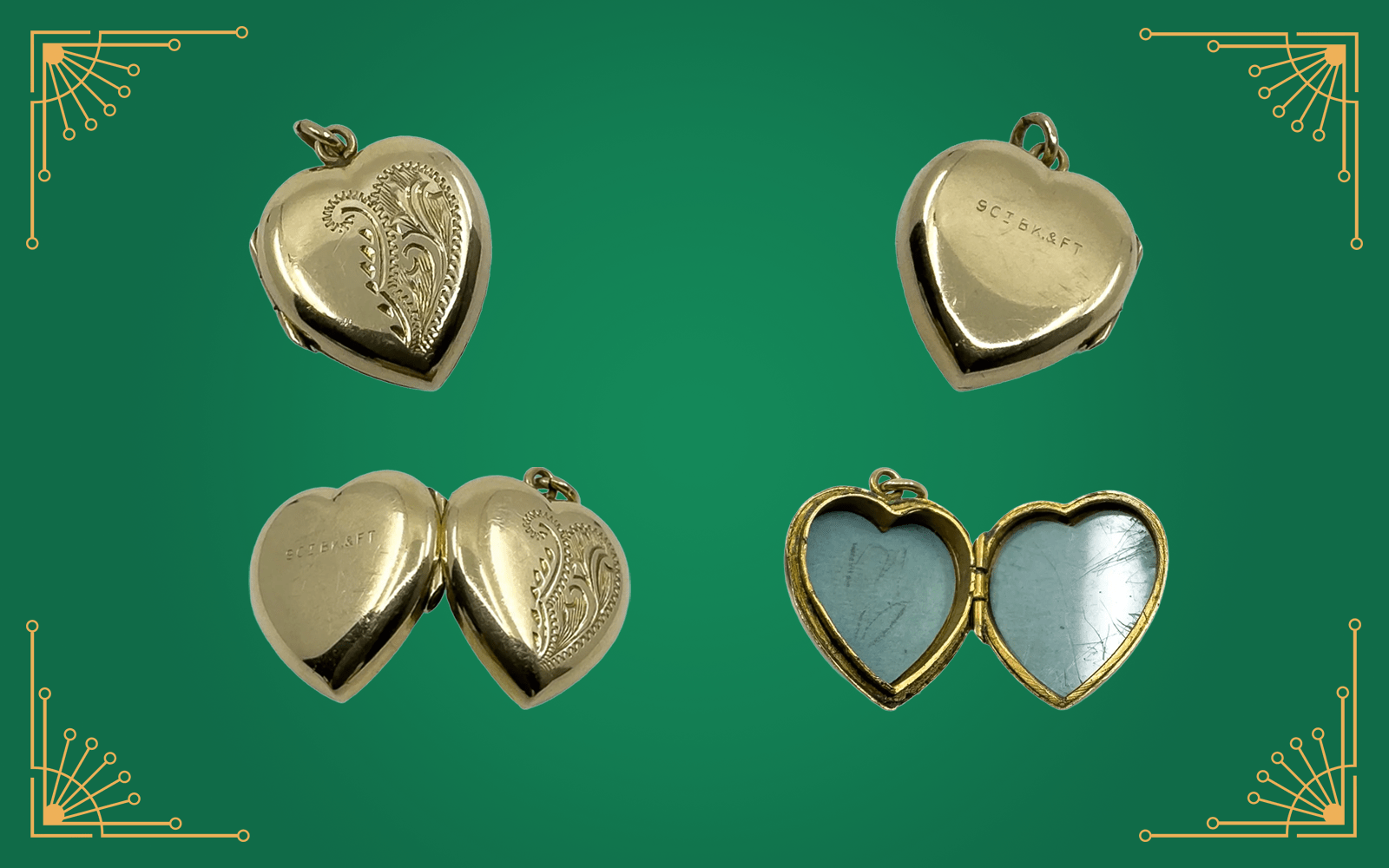
Gold back and front is one of those older jewellery terms that can be confusing when you first see it on an antique or vintage locket. It sounds simple, but it does not mean the same thing as solid gold, rolled gold or gold plated.
In this guide, I’ll explain what gold back and front means, how to understand the marks, what parts of a locket may be gold, and what to check before buying one. It follows on naturally from my guide to solid gold, gold filled, rolled gold and gold plated jewellery, but gives gold back and front lockets their own clear explanation.


Table of Contents
- What Gold Back and Front Means
- Is Gold Back and Front Solid Gold?
- How It Differs from Rolled Gold and Gold Plated
- Why Lockets Were Made This Way
- Marks You Might See
- What to Check Before Buying
- Are Gold Back and Front Lockets Worth Buying?
- Quick Comparison Guide
- FAQs
- You Might Also Like
- Final Thoughts
- About Ps Its Vintage
- References
What Gold Back and Front Means
Gold back and front, sometimes also described as gold front and back or 9ct B&F, is a trade description often seen on antique and vintage lockets.
It usually means the front and back outer sections of the locket are gold, while other parts of the locket may not be. The frame, hinge, rim, inner compartments, jump ring or fittings may be another metal, often with a gold-coloured finish.
This matters because a locket is not one flat piece of metal. It is made from several parts, including the front cover, back cover, hinge, internal frames and sometimes glass or photo compartments. When a locket is described as gold back and front, it should not automatically be read as solid gold throughout.
A simple way to understand it is this: the visible front and back panels are the gold parts, but the whole locket should not be assumed to be solid gold unless it is clearly tested, hallmarked or accurately described as such.
Is Gold Back and Front Solid Gold?
No, not usually. A gold back and front locket is not the same as a fully solid gold locket.
If a locket is marked “9ct back and front”, “9ct B&F” or similar, the wording generally points to the gold content of the front and back outer sections. It does not usually mean the hinge, frame, rim or internal fittings are also 9ct gold.
This is why the wording must be read carefully. A locket described as solid 9ct gold should be gold throughout, apart from non-metal parts such as glass, photographs or later inserts. A gold back and front locket is a different construction and should be priced and described differently.
It is also worth remembering that trade stamps are not the same as full hallmarks. A proper UK hallmark is an official set of marks applied by an assay office to confirm the precious metal and fineness of an item. A “gold back and front” stamp is a useful clue, but it is not a formal hallmarking category.
How It Differs from Rolled Gold and Gold Plated
Gold back and front, rolled gold and gold plated all describe different things.
Gold plated jewellery usually has a thin layer of gold applied over another metal. With wear, that surface layer can rub through, especially on raised areas, edges and points of contact.
Rolled gold, and closely related terms such as gold filled, usually refer to a layer of gold mechanically bonded to a base metal. It is generally more substantial than ordinary gold plating, although it is still not solid gold throughout.
Gold back and front is different again. It usually refers to the construction of a locket, where the front and back outer panels are gold, but other parts may be another metal. It is not simply a surface coating term, and it is not the same as saying the whole locket is solid gold.
The safest approach is to read the exact wording, check the marks, look closely at the edges and fittings, and compare the description with clear photographs.
Why Lockets Were Made This Way
Lockets were made to be personal, practical and often sentimental. They could hold photographs, hair, tiny keepsakes or small mementoes, and many older examples were made to be worn close to the body.
Using gold on the front and back gave the locket the appearance and feel of gold where it was most visible. At the same time, using another metal for the frame or inner structure could make the piece more affordable and practical to produce.
This was especially useful for lockets because they need working parts. Hinges, rims, photo frames and closures all have to open, close and hold their shape. A locket is more complicated than a simple pendant, so mixed construction was common in many older pieces.
That does not make a gold back and front locket a poor-quality item. It simply means it needs to be understood correctly. Many antique and vintage gold back and front lockets are attractive, wearable and collectible, provided they are described honestly and priced appropriately.
Marks You Might See
Gold back and front lockets may be stamped in several different ways. The exact wording varies, especially on older pieces.
Common marks and descriptions may include:
- Gold back and front
- Back & front
- 9ct back and front
- 9ct front & back
- 9ct B&F
- Gold fronted and backed
- Maker’s initials or trade marks
You may also see no clear mark at all, especially if the locket is worn, older, repaired or too small in certain areas to show a clear stamp. In that case, the description should be based on testing, construction, visible wear and the seller’s assessment.
Be careful not to confuse decorative stamps with full hallmarks. A true hallmark normally tells you who submitted the item, what precious metal and fineness it is, and where it was assayed. Some older hallmarks may also include a date letter, depending on the period and assay office.
If you are unsure, it is always sensible to ask for close photographs of the marks and a clear explanation of what has been tested or identified.
What to Check Before Buying
When buying a gold back and front locket, the wording is only part of the story. Condition and construction matter just as much.
Here are the main things to check:
- The exact description: look for clear wording such as gold back and front, not vague phrases like “gold coloured”.
- The marks: check whether the locket is stamped, hallmarked, tested or simply described by appearance.
- The hinge: it should open and close securely without feeling loose or strained.
- The closure: the locket should stay shut properly when worn.
- The edges: check for wear, lifting, splits, dents or base metal showing through.
- The inner frames: older photo frames may be missing, replaced or delicate.
- The bail or jump ring: this is a common wear point, especially if the locket has been worn on a chain for many years.
- The size and weight: a large locket may look substantial, but that does not always mean it is solid gold throughout.
For secondhand and antique lockets, signs of age are normal. Light surface wear, small dents or a little softness to engraving can be part of the piece’s history. The key is that the condition should be shown clearly and described honestly.
Are Gold Back and Front Lockets Worth Buying?
Yes, gold back and front lockets can be very worth buying, as long as you understand what you are buying.
They often offer the look and charm of older gold jewellery without the same price as a fully solid gold locket. They can also have lovely engraving, classic shapes, sentimental detail and a softer antique feel that is hard to find in modern jewellery.
They are especially appealing if you want a traditional locket to wear, collect or give as a meaningful piece, but do not necessarily need it to be solid gold throughout.
The important thing is accuracy. A gold back and front locket should not be priced or described as a solid gold locket unless that is proven. When the description is clear, the marks are shown where available, and the condition is properly photographed, gold back and front lockets can be a beautiful and sensible choice.
Quick Comparison Guide
This simple guide helps separate the main terms you may see in locket and jewellery descriptions.
FAQs
Gold back and front is a trade description often seen on antique and vintage lockets. It usually means the front and back outer sections are gold, while other parts such as the frame, hinge, rim or inner fittings may be another metal.
No, not usually. It should not be treated as a fully solid gold locket unless it is clearly described, tested or hallmarked as solid gold throughout.
It depends on the piece. Gold back and front usually refers to gold being used on the main front and back faces, while gold plated refers to a thin surface layer of gold over another metal. Condition, construction and wear are more important than the term alone.
Yes, they can be lovely pieces to buy if the condition, hinge, closure, internal fittings and description are clear. They often offer the look and feel of older gold jewellery without the same cost as a fully solid gold locket.
Look for wording such as gold back and front, back & front, 9ct B&F, 9ct front & back, or similar trade stamps. These are not the same as a full UK hallmark, so the whole locket should not be assumed to be solid gold.
You Might Also Like
If you found this helpful, you might also enjoy these related guides:
- Solid Gold vs Gold Filled, Rolled Gold and Gold Plated Jewellery
- How to Read Hallmarks in Vintage and Secondhand Jewellery
- What’s the Difference Between Antique, Vintage and Secondhand Jewellery?
- Browse antique, vintage and preloved lockets
Final Thoughts
Gold back and front lockets are a lovely part of antique and vintage jewellery, but the term needs to be understood properly. It usually means the front and back outer sections are gold, not that the whole locket is solid gold throughout.
When buying one, look closely at the marks, hinge, closure, inner fittings and overall condition. A clearly described gold back and front locket can still be a beautiful, meaningful and wearable piece, especially if you love older jewellery with character.
You can explore current pieces in the lockets collection, with materials, marks and condition details shown where available.
Please note: This guide is provided for general information only. Every effort is made to check the information against recognised sources, but jewellery can vary and identification from photographs or written descriptions is not conclusive. Important decisions about authenticity, value, condition, repairs or care should be confirmed by an appropriately qualified professional who can examine the piece in person.
About Ps Its Vintage
Ps Its Vintage is independently run and specialises in preloved, vintage and antique jewellery. Every piece is chosen for its character, quality and symbolism, with a focus on hallmarks, makers and meaningful design. Whether you’re comparing locket materials, checking marks on an older pendant, or choosing a meaningful secondhand piece, this guide is here to help you choose with confidence.
References
- GOV.UK – Hallmarking: Practical Guidance Summary
- Assay Office London – What Is a Hallmark?
- Goldsmiths’ Company Assay Office – Trace a Hallmark
- Business Companion – Hallmarking
- V&A – A History of Jewellery
- London Museum – Objects of Love & Loss: Mourning Jewellery
- British Museum – Mourning Locket, Hull Grundy Gift
